
Urban development is increasingly being shaped by the need to move beyond conventional ideas of smart cities and technological advancement, and instead focus on the fundamentals of strong planning, accountable governance, and individual responsibility. Cities are not just designed spaces but lived environments, and their true success depends on how effectively they serve people on the ground.

A meaningful approach to urban growth requires close observation and honest evaluation. Identifying gaps is as important as recognising achievements, as real progress depends on acknowledging shortcomings and working collectively to improve them. Platforms like the Elets Urban Innovation Summit 2026, organised in collaboration with the Municipal Corporation of Chandigarh, play a crucial role in enabling dialogue, knowledge exchange, and collaborative thinking around building future-ready cities.
One of the key challenges in urban development is the persistent gap between planning and execution. Policies, reports, and presentations often outline ambitious visions, but real transformation happens only when these ideas are implemented effectively. Innovation, therefore, cannot remain confined to paper; it must be reflected in service delivery, efficiency, and accountability. True progress begins when individuals and institutions take ownership and translate intent into action.
Structured and disciplined planning is equally critical for sustainable urban growth. Unregulated development and weak adherence to approved plans often lead to long-term challenges, including poor infrastructure alignment and inefficient land use. Among the most pressing concerns is the lack of robust drainage systems. Without proper drainage, even well-developed areas face waterlogging, sanitation issues, and declining quality of life. Moving towards cleaner, closed, and efficient systems is essential for cities aspiring to modern standards.
Urban planning must also prioritise inclusivity. Cities should be designed keeping in mind the needs of residents rather than focusing solely on tourism. While tourism contributes to economic growth, many tourism-driven cities still lack basic infrastructure such as proper roads, affordable accommodation, and accessible public facilities. This imbalance often makes cities less liveable for residents and unaffordable for a large section of society.

The growing migration from rural to urban areas further adds to the pressure on city infrastructure. A major driver of this migration is the lack of quality education in villages, prompting families to move in search of better opportunities for their children. Addressing this challenge requires strengthening rural education systems and reducing the gap between public and private schooling, thereby ensuring more balanced regional development.

At the same time, gaps in basic service delivery continue to persist. While initiatives like “Har Ghar Jal Yojana” have improved water access in rural areas, many urban households still struggle to receive reliable tap water. This highlights the need for better coordination, long-term planning, and efficient implementation of infrastructure projects. Frequent changes, lack of inter-departmental alignment, and short-term approaches often lead to inefficiencies and increased public expenditure.
Also Read: Seamless mobility begins with integration, coordination and a strong culture of safety
Urban transformation also depends on recognising the value of small, practical innovations. Improvements in traffic management, public transport, navigation systems, and service accessibility can significantly enhance everyday life. Innovation should not be limited to large-scale technological solutions but should also focus on simplifying daily experiences for citizens.
Equally important is the need for empathetic governance. Public systems must be designed to be responsive, transparent, and citizen-friendly. People should not have to navigate complex procedures or make repeated visits to access basic services. Efficient governance lies in listening to citizens, responding clearly, and ensuring that systems are built to serve rather than complicate.
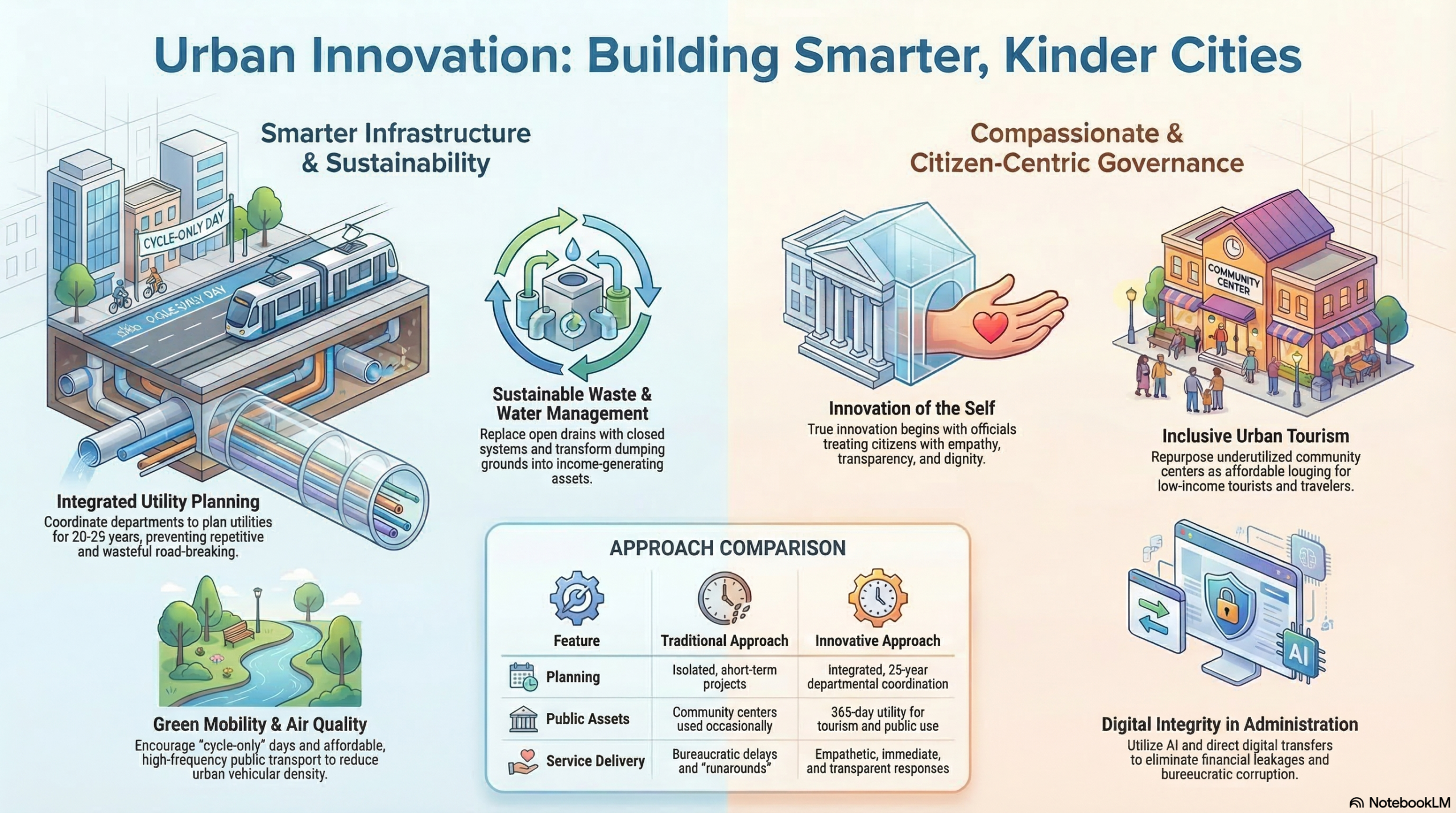
Ultimately, sustainable urban development is driven not just by infrastructure or investment, but by mindset. When planning is thoughtful, execution is efficient, and governance is rooted in responsibility and empathy, cities can evolve into inclusive and resilient spaces that improve the quality of life for all.
Insights shared by: Shri Gulab Chand Kataria, Hon’ble Governor of Punjab and Administrator, UT Chandigarh, at the Elets Urban Innovation Summit 2026 on 13th March 2026 at Taj Hotel, Chandigarh