
India’s rapid urban transformation is reshaping cities into powerful drivers of economic growth, innovation, and opportunity. With the urban population projected to reach nearly 600 million by 2030, contributing close to 70 per cent of the country’s GDP, cities are no longer just administrative units, but dynamic engines of national progress.

As rapid urbanisation continues, the need for efficient, technology-driven, and citizen-centric governance has become increasingly significant. Urban administrations are required to not only address present challenges but also prepare for future demands through innovation, strategic planning, and collaborative approaches.
Digital transformation has emerged as a key pillar of urban governance. The Municipal Corporation of Chandigarh is actively integrating digital technologies and data-driven systems into civic administration. Integrated digital platforms are being developed to strengthen service delivery, enable faster grievance redressal, and improve coordination across departments. These initiatives are contributing to a governance framework that is more transparent, responsive, and accessible to citizens.
Urban mobility remains another critical area of focus. With increasing vehicle ownership and growing pressure on infrastructure, the adoption of intelligent mobility solutions has become essential. Chandigarh has implemented the first phase of its smart parking system, with the second phase planned for rollout in the near future. Supported by digital payment systems and enhanced monitoring mechanisms, these initiatives are helping create a more organised and efficient urban transport ecosystem.
Sustainability continues to be central to Chandigarh’s development strategy. Recognised as one of India’s greenest cities, with nearly 52 per cent green cover, preserving this environmental identity remains a priority. Efforts are being made to strengthen water management systems, improve sewerage infrastructure, and promote the reuse of treated wastewater for non-potable purposes. Such measures are crucial in addressing climate challenges and ensuring responsible resource management.

Also Read: Punjab Governor Calls for Citizen-Centric Urban Innovation

Inclusive development is also a key focus area. Urban growth must ensure equitable access to services, infrastructure, and economic opportunities for all sections of society. Initiatives such as the development of organised vending zones and infrastructure support for small businesses and street vendors are being undertaken to create a balanced and inclusive urban ecosystem while maintaining the city’s planned character.
The future of urban governance is increasingly being shaped by emerging technologies such as artificial intelligence and data analytics. However, the emphasis remains on ensuring that these technologies are implemented responsibly and inclusively. The objective is to build cities that are efficient, resilient, and people-centric, where technology enhances everyday life and governance systems become more intuitive and effective.
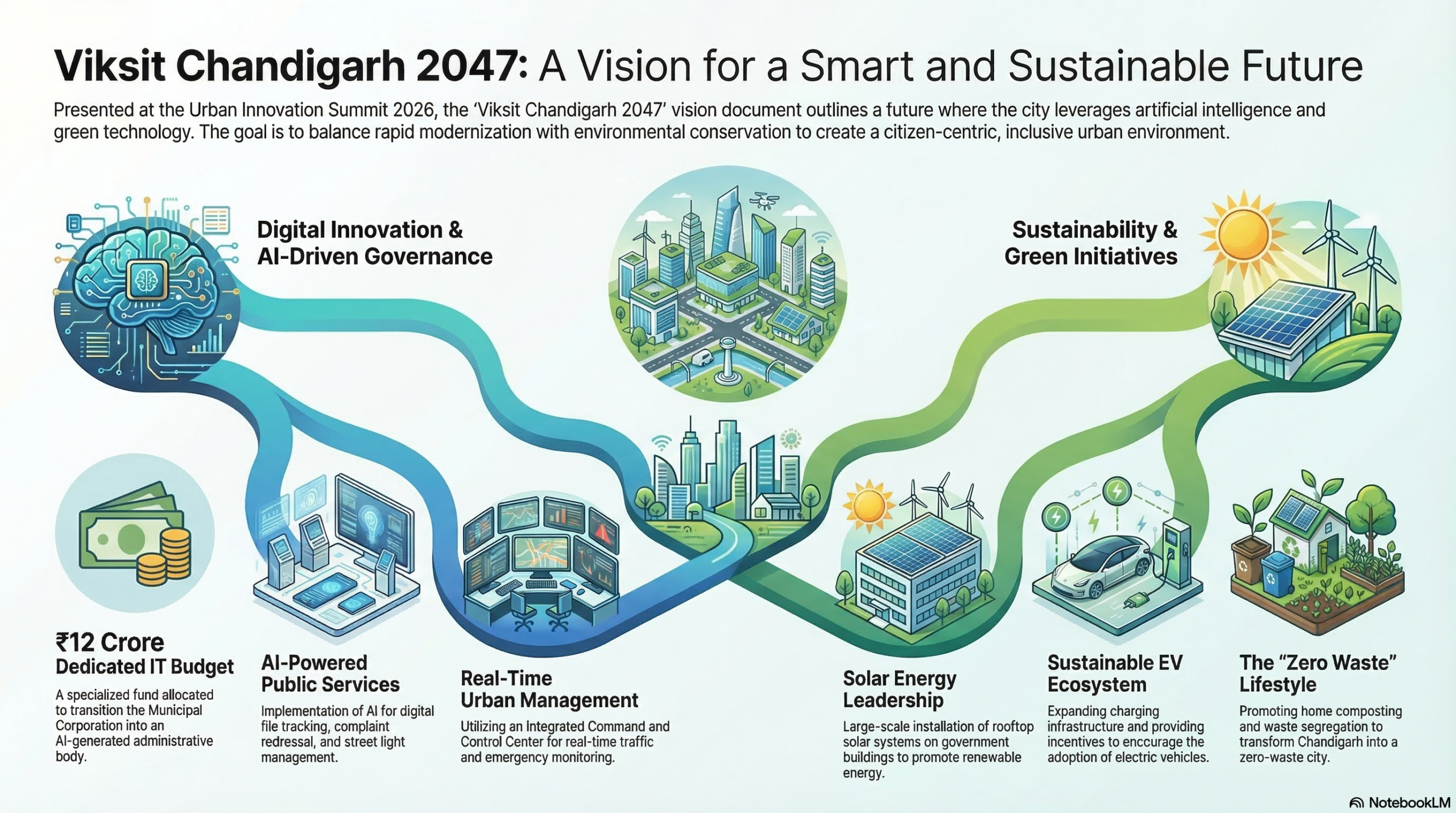
Through a combination of digital innovation, sustainable practices, and inclusive policies, Chandigarh is steadily progressing towards becoming a model for future-ready urban development, reflecting a comprehensive and balanced approach to building resilient urban ecosystems.
Insights Shared by Amit Kumar, Commissioner, Municipal Corporation Chandigarh, at the Urban Innovation Summit 2026, conducted on 13th March 2026 in the Taj Hotel, Chandigarh