


AI Forecast · eGov

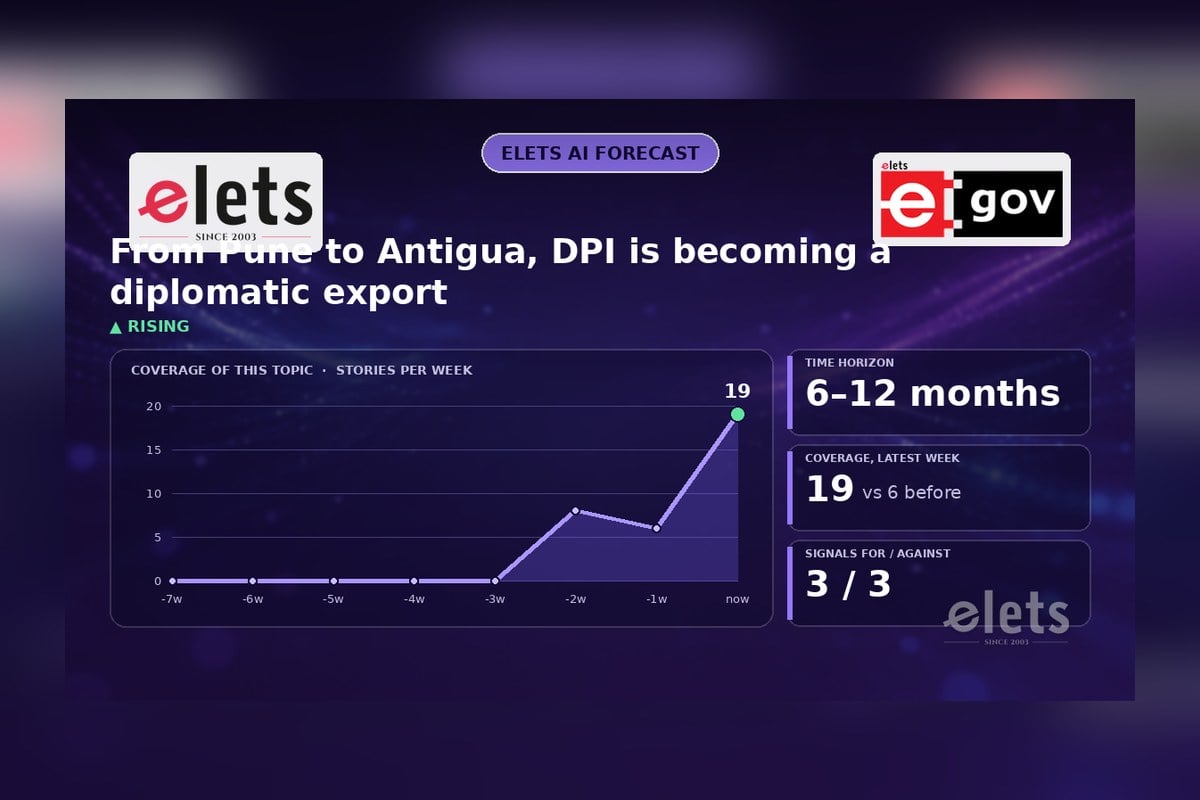
This is what AI says. It is an AI-assisted reading of publicly reported developments, reviewed by the Elets Editorial Desk. It is a qualitative assessment with stated uncertainty, not a probability or a prediction of certainty, and not investment, legal or policy advice. Outcomes may differ.
DPI featured at both BRICS and Commonwealth meetings this week, so more formal cooperation agreements may follow.

Assessment: Plausible · Horizon: 6–12 months · Direction: rising

Uncertainty: This depends on whether discussions at BRICS, the Commonwealth and in bilateral talks turn into signed agreements. Concerns about technology dependence and sovereignty, along with wider geopolitical pressures, could slow commitments.

Verified development
When: 4 November 2026

The BRICS ICT Working Group met in Pune with a focus on digital public infrastructure and governance.
Interpretation
The evidence suggests that India is putting DPI on several diplomatic agendas at once. External Affairs Minister Jaishankar highlighted the importance of DPI at a Commonwealth meeting in Antigua and Barbuda in the same week as the BRICS discussions in Pune. This could lead to more memoranda or pilot partnerships over the next year.
Digital government cooperation is also active between other countries, as seen in Azerbaijan and Uzbekistan's talks. At the same time, debate on balancing technology dependence with self-sovereignty may shape how such deals are designed.
Who it matters to
- Ministry of External Affairs and MeitY teams negotiating DPI partnerships
- Indian DPI implementers and IT firms seeking overseas deployments
- Partner-country digital government agencies weighing sovereignty and vendor dependence
Supporting signals
- The BRICS ICT Working Group focused on DPI and governance at its Pune meeting.
- Jaishankar highlighted DPI at a Commonwealth meeting.
- Bilateral digital government cooperation talks are taking place elsewhere, as between Azerbaijan and Uzbekistan.
Contrary evidence and risks
- Concerns over technology dependence and sovereignty may make partner governments cautious about adopting external platforms.
- Several engagements so far are discussions rather than signed commitments.
- Wider geopolitical and economic pressures, including the Iran war and debt concerns cited in market coverage, could crowd out digital cooperation agendas.
The global picture
Beyond India-led forums, governments such as Azerbaijan and Uzbekistan are discussing digital government cooperation. This suggests a wider appetite for sharing platforms and know-how.
Former EU policymaker Paul Timmers' comments on balancing tech dependencies with self-sovereignty point to a design question partners may raise: who controls the stack.
Next milestone to watch
- Outcome documents or statements from the BRICS ICT Working Group
- Any DPI MoUs announced with Commonwealth members
- Follow-up agreements from Azerbaijan–Uzbekistan digital government talks
- Upcoming multilateral ICT meetings, including ITU Council elections
Editorial note
AI assisted the research and drafting of this forecast; the Elets Editorial Desk reviewed it and owns the published assessment. Reviewed: 05 Nov 2026. It gives a qualitative assessment, not a probability. Spotted an error or have an update? Write to the Elets Editorial Desk and we will correct it and note the change here.
This is what AI says. It is an AI-assisted reading of publicly reported developments, reviewed by the Elets Editorial Desk. It is a qualitative assessment with stated uncertainty, not a probability or a prediction of certainty, and not investment, legal or policy advice. Outcomes may differ.