



 B R Ambedkar Open University was the first open university to be set up in India. Initially known as Andhra Pradesh Open University, its establishment was an affirmative action on the part of the state government for providing opportunities of higher education to all sections of society. In 1983, the university stated functioning with a modest enrolment of 6,321 students and 22 study centres. Over the years, it has grown in stature and now has student strength of 1,56,806 and 200 study centres.
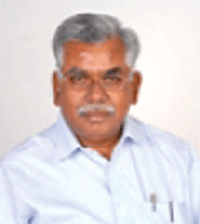
Prof O R Reddy, who took over as the Vice Chancellor of the university in November 2007, brings with him over 27 years of distinguished teaching experience. Holding a PhD in Special education, he has held academic positions such as Chairman, Board of Studies (PG) and Dean, Faculty of Education at Andhra University. Prof Reddy has also served on several expert committees like Recurring-Organisation of B.Ed curriculum in Andhra Pradesh under the aegis of APSCHE, External Evaluation Committee of the Janasala programmes under the central Ministry of Human Resource Development.

Digital Learning interviews Prof Reddy on BRAOU’s contribution in the field of higher education.

How is the BRAOU motto ‘Education at your doorstep’ being translated into reality?

Unlike formal institutions which require students to regularly attend classes at the college/university, open university offers a learner flexibility in terms of studying from home. Thus education is reached to the doorstep. BRAOU is also unique as it offers higher education opportunities to socially disadvantaged and geographically isolated sections of society. The university lays special focus on potential students like housewives, farmers, skilled and unskilled labourers, jawans, etc who are otherwise unable to acquire new skills and higher qualifications. And the figures speak for themselves. In the academic year 1983-84, the student strength of the university was 6,321. In 2007-08 the student strength reached 1,56,806.

What steps have been taken by the university to integrate ICT in its education framework?
BRAOU is one of the first open learning institutions to make use of interactive satellite-based technologies for providing support to its students. In 1999, the university started telecasting lessons through the Doordarshan regional channels. On Sundays, we also conduct interactive teleconferencing on the regional channels for our students. We also have airtime on the radio network through which we impart lessons and radio phone-in programmes for students.
We have integrated ICT in our administrative services as well. Students can avail of online banking to pay admission and other fees. The exam schedules are prepared on computerised Date Sheets and a student data base is also prepared. Students have easy access to university information through the LAN network all throughout the year.
Since separate units were created for student services and examination branches, there is increased accuracy and speed in the processing of admission and examination data.
How does BRAOU ensure equal access to socially disadvantaged groups, women and persons with disabilities?
To meet the changing individual and social needs of all sections of society, BRAOU strives to provide education to all sections of society through its wide network of 200 study centres spread over the entire state. Scholarships are extended to eligible students as per norms. The university has a significant contribution in liberalising higher education in the state by ensuring equal access to those communities for which education was hitherto inaccessible. A huge majority of learners from the Backward Castes (37.46%), Scheduled Castes (22%) Scheduled Tribes (7.37%) and women (34.22%) have been brought into the mainstream through education. The university has brought in a silent revolution in the last twenty five years.
Current enrollment of students with disability in our university is 3227 at the undergraduate level and 89 at the postgraduate level. We are planning to supply materials for students with visual impairment in Braille. Apart from this BRAOU has signed an agreement with the Rehabilitation Council of India to offer B.Ed (Special Education) programme from this academic year.
A huge majority of learners from the Backward Castes (37.46%), Scheduled Castes (22%) Scheduled Tribes (7.37%) and women (34.22%) have been brought into the mainstream through education
Of the 200 study centres of the university, seven are exclusively for women. Why?
BRAOU recognises that women have always been denied opportunities for education due to social and cultural restrictions. Therefore, exclusive centres have been set up for women to provide them equal educational opportunities. It also helps counter the notion that women cannot aspire for higher education. Apart from functioning as study centres, these also give special care and attention to their needs by offering women counselling and opportunities to overcome individual inhibitions.
What role does GRADE play in curriculum designing and improving quality of teaching?
Since 1998, 1000 prisoners have enrolled for undergraduate and postgraduate programmes. Education has a positive impact on life-term prisoners and help them develop a purpose in life. Some of them become counsellors and teach other inmates
The G. Ram Reddy Academy of Research in Distance Education (GRADE) was set up in 2001 to develop systemic research in Open and Distance Learning (ODL). Studies in open and distance learning have shown that research in system development can be used for strengthening and streamlining the system and practices. Another main thrust of GRADE is human capital formation for ODL.
The development and effectiveness of the ODL system depends on quality assurance processes in place in its various subsystems. The Quality Assurance Cell was therefore established as a nodal agency to promote quality assurance.
GRADE has identified important areas in the functioning of ODL and has developed performance indicators and performance ensuring measures for the same. These performance indicators are published as a series for information dissemination to benefit various functionaries in this system. The academy also organises periodic interactive workshops on research methodology in distance education.
What has BRAOU’s experience been vis-a-vis its initiatives for prisoners?
Through its study centres for prisoners, BRAOU is serving the cause of social rehabilitation by taking education to the doorstep of the prisons. Since 1998, 1000 prisoners have enrolled for undergraduate and postgraduate programmes. Education has a positive impact on life-term prisoners and help them develop a purpose in life. Some of them become counsellors and teach other inmates.
In March this year, 37 prisoners from the central prisons of curlapally, Rajahmundry and Warangal received their degree and diploma certificates in a convocation ceremony.
Plans are also underway to widen the university’s reach by setting
up more study centres in district level jails too.
In your view how does short-term vocational and certificate courses help further the cause of higher education?
Being need based and related to livelihood skills, the vocational and certificate courses have a direct correlation to higher education. Students can pursue these courses as and when they feel the need to complement their livelihood skills.
How does your university plan to pursue the 11th Five Year Plan target for higher education?
We have initiated action for extending the outreach of BRAOU by offering new programmes and courses with a vocational focus. There are also plans to set establish 25-30 study centres, especially in those areas where the enrollment rate is minimally low.
We are also tying up with Andhra Pradesh Open School to carry out collaborative programmes. This will give a thrust to vertical mobility into the University through students who desire to pursue higher education after passing out of the open school.
How does BRAOU plan to initiate higher education among tribals?
At present, the higher education percentage in tribal areas is 7.4 %. The university is exploring means to improve it by opening more centres in areas where Integrated Tribal Development Agencies are functoning.
We also seek to enter into collaborative arrangements with continuing education centres to offer short-term vocational courses in tribal areas. 