


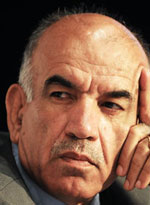
 By Abdul Rahman Panjshiri,
Director, International Relations, Ministry of Information and Culture, Islamic Republic of Afghanistan sustainable development is a high priority for every nation and Afghanistan is no exception. In spite of political and social turbulence, the last decade saw development in every sector and the media played an important role in achieving this national objective.Afghanistan is a new full member of international community, taking steps to use ICT to promote freedom of speech, good governance and public transparency.The historical Bonn agreement laid the foundation of a democratic Afghanistan, committed to public participation in the decision-making processes. We have had some creditable achievements in using ICT particularly in the finance and budget planning, rural development project evaluation and monitoring under the “National Solidarity Program”. Increased accessibility of internet expands use of alternative platforms to address social problems.

Afghanistan faces many challenges and threats on the path of development. The most pressing among these is the threat of resurgence of extremism. Terrorists use the rural areas to attack the cities and disrupt social harmony.
Nearly 75 percent of Afghanistan population is living in rural areas and only by building infrastructure and services, providing education and public participation can we defeat extremism.

Presently, we are moving towards a period of transition of power to Afghans by 2014. Afghanistan and the international community came a long way and we cannot afford to lose the last battle against extremism.

It is the responsibility of the state of Afghanistan and the international community to spread the power of media and ICT for sustainable development. Together with dialogue and more cooperation amongst international community, state and individual, we will strike the ideological core of the extremism and terrorism and this would be as a cornerstone for new free Afghanistan. This is an opportunity for all of us to come close together for our mutual survival and revival.

eGovernance for Urban Infrastructure

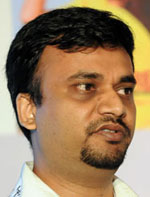 By Manu Srivastava,
eGovernments Foundation
The basic infrastructure life cycle comprises of the stages of budgeting where funds are allocated for the planned work, tracking execution, and getting feedback. Elements of good governance are transparency and accountability, participatory governance and data driven decision making.
Technology is the enabler in ensuring that these key ingredients are part of good governance and quality urban infrastructure.
Participatory budgeting is identified along with the work where it is to be allocated. It is defined as democratic deliberation and decision making process where people decide how to allocate municipal budget. In this presentation the focus was mainly on how budget is allocated to the municipalities. They have ward committees, as mandated by constitution, which identify spending priority and develop specific proposals and with the help of experts they figure out the estimates and the priority. Then community votes on what kind of work needs to be picked up and municipalities implement those works.
As a citizen you would know what kind of work is going on in your specific ward. In this people participate to know what kind of work is taken up by the municipality and can vote for a particular project.
Based on this, municipalities can know what citizens want. It is not something municipality decides upfront as this is based on the needs of citizen and what they want. At execution level there is e-tendering and e-procurement platform where a lot of work is being done in this area. The contractor is selected based on performance and feedback of the citizens. This is made possible through the data where contractors have worked in the past have been rated.
This information could be given back to the citizens as to how much work has been completed and how much task has been performed. In this way while selecting a contractor, a person has the record of all the things that have been done by him in the past and work by work categorisation can also be looked at as to how a particular contractor is performing in a particular area. There is also grievance redressal system and citizens can also give their feedback.