


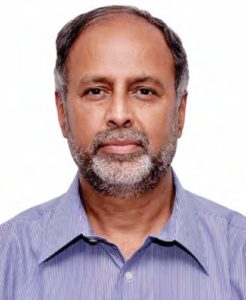
The key challenge in introducing effective urban mobility systems is usually the fact that these systems are required to be created in the most developed regions of the cities that are already very crowded,” Dr Sudhir Krishna, Secretary, Ministry of Urban Development, Government of India.

 Tell us about the key challenges in creating infrastructure for better urban mobility in the country?
It is well understood that planned urban development is key to the speedy growth of the country. Efficient mobility solutions are the backbone of urbanisation. The key challenge in introducing effective urban mobility systems is usually the fact that these systems are required to be created in the most developed regions of the cities that are already very crowded. This makes the laying of BRTS corridors or metro rails viaducts rather complex as the construction process contributes to congestion and pollution. The ideal situation would be to ensure that mobility solutions, or at least planning for the same should precede urbanisation.
Please tell us about the mandate of Unified Metropolitan Transport Authority (UMTA).
UMTA is a single window for providing all regulatory approvals relating to urban transport. It is also expected to bring in greater coordination and synergy among different modes of transport and their regulators. While this would finally call for amendments to the various legislations that relate to the specific authorities, in the interregnum, it can function as a coordinating body under the executive authority of the State Government and the local bodies.

Tell us about the new policies that the Ministry is planning to improve the state of the infrastructure in our urban areas.
The Ministry (MoUD) has plans to provide enhanced focus on the spatial planning for cities and their periurban areas, for which we intend to update/ revise the UDPFI Guidelines and prepare a panel of consultants. We are also intending to revisit the Urban Water Supply initiatives. This is being done with the purpose of reorienting the focus on recycling of used water and making the water supply and other urban infrastructure projects self sustaining.

How do you assess the performance of the Jawaharlal Nehru National Urban Renewal Mission (JNNURM)?
Phase-1 of JNNURM, which has technically concluded on 31st March 2012, has been hailed as a great success, though there have been umpteen learning lessons as well. While we have been able to pump in about one lakh crore of rupees in the urban infrastructure projects, which includes contributions from the Centre, States and the Local Bodies, not all projects could be completed on time. The bottom line is that we have learned some important lessons for the next phase of JNNURM.

Targets :
1. According to the India Infrastructure Report, 1996, during the next ten years about 28,035 crores of investment will be needed for urban water supply, sanitation and roads.
2. The Central Public Health Engineering (CPHEEO) has estimated the requirement of funds for 100 percent coverage of the urban population under safe water supply and sanitation services by the year 2021 at `172,905 crores.
3. Estimates by Rail India Technical and Economic Services (RITES) indicate that the amount required for urban transport infrastructure investment in cities with population 100,000 or more during the next 20 years would be of the order of `207,000 crore

What are the ways in which ICT is bringing transparency in the building of new infrastructure?
In respect of urban transport, the solutions from ICT are going to play a key role in enabling us to obtain greater synergy and optimum benefits from the investments that are being made. For water supply, the SCADA systems enable enhanced efficiency and transparency. Similar benefits are available in respect of solid waste management. It is difficult to conceive of urban infrastructure without ICT solutions.
“In urban transport, the solutions from ICT are going to play a key role”
Given the fact that the needs and aspirations of the urban population keeps evolving at a rapid pace, where do you see the Ministry of Urban Development ten years from today?
India being a vast country with relatively low level of urbanisation, the future is surely laden with steady, if not exponential, growth of cities and urban population. Currently the level of urban population stands at 31 percent. This should grow by almost 10 percentage points in every decade. This makes the task of the Urban Development Ministry very exciting.
The challenge would have to be met through international and intranational cooperation for exchange of knowledge and expertise and improved programme management, besides building the capacities of the local bodies. We are working on numerous ideas.
Housing is a vital component of urban development, but there is a huge gap in its demand and supply. What steps is the Ministry taking to make it possible for a middle class or poor family to own a house of their own in the urban centres?
We have become more specific in advising the States and the local bodies to make appropriate provisions for housing for different economic segments of the society in the land use plans of the cities and local planning areas. We have also started advocating mixed land use, which should lead to a gradual smoothening of the price curve for housing.
Under the 12th Five Year Plan, what kind of new urban infrastructure initiatives are being planned?
We have decided to focus on spatial planning for the cities and their surroundings, for which Transit Oriented Development would be of essence. Besides, improvement in the quality and quantity of water available to the citizens will also receive greater amount of attention.
In your opinion what are the ways by which the IT industry empowers diverse human assets and raises expectations?
Intelligent Transport Solutions have turned out to be a core need for efficient and effective management of public transport systems. Similar results are also visible from use of IT in the planning and management of other urban infrastructure, be it water supply, sanitation, solid waste management or street
lighting. We need more and more IT solutions and solution managers.