
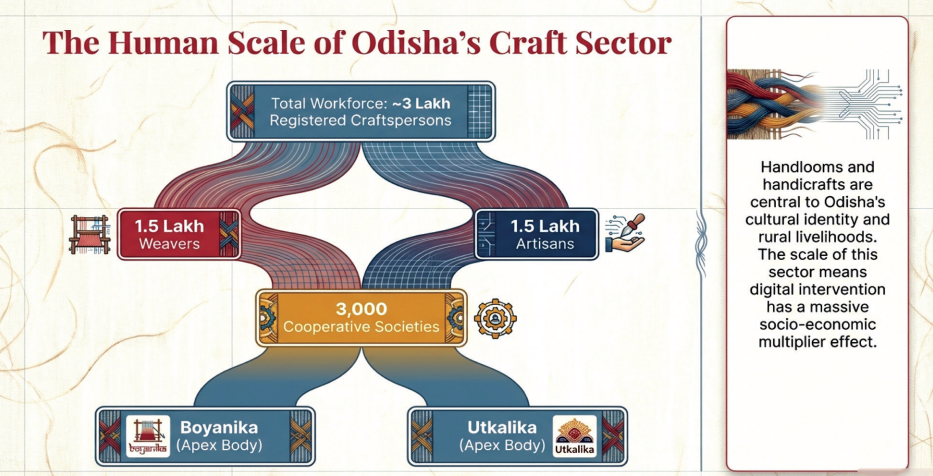
As India advances its AI for All vision under the IndiaAI Mission, Odisha has planned to integrate emerging technologies into its traditional handlooms and handicrafts sector to implement inclusive and marketdriven growth. With over 1.5 lakh registered weavers, 1.5 lakh artisans, and nearly 3,000 cooperative societies, the state has planned to modernise its craft ecosystem to implement stronger authenticity and outreach mechanisms.

Supported by apex bodies such as Boyanika and Utkalika, Odisha has planned to deploy AI and blockchain solutions to implement traceability, prevent duplicity, and enhance global competitiveness. The Department has planned to adopt AI-based forecasting and digital platforms to implement improved market access while preserving heritage.
Smt. Poonam T. Guha, IAS, Commissionercum-Secretary, Department of Handlooms, Textiles & Handicrafts, Government of Odisha, in conversation with Muskan Jaiswal of Elets News Network, outlines how the state has planned to leverage AI to implement artisan empowerment and strengthen Odisha’s position in India’s digital economy journey
What are the key AI priorities for departments working closely with artisans, MSMEs, and traditional industries, particularly in improving outreach, efficiency, and impact?
For sectors such as handlooms and handicrafts, which are decentralised and artisan-driven, we have planned to prioritise authentication, market intelligence, operational efficiency, and enhanced outreach to implement structured digital transformation now.

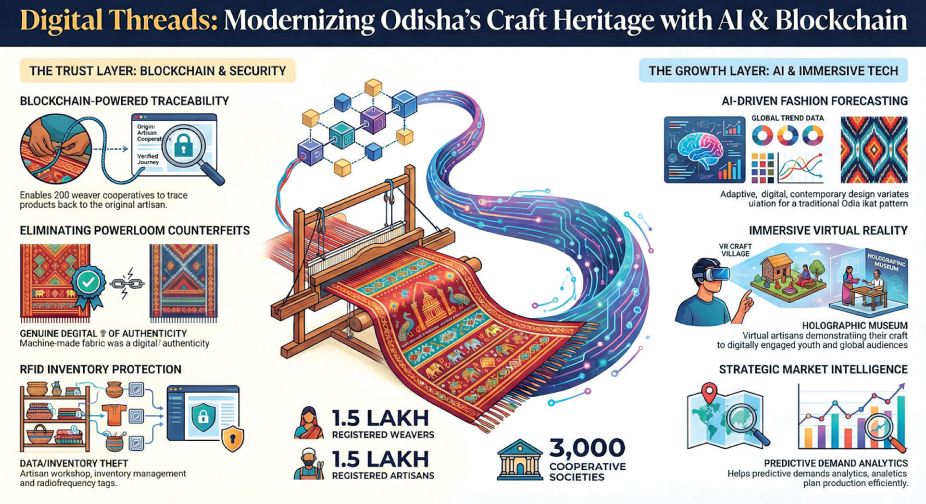

In Odisha, we have planned to introduce blockchain-enabled traceability to implement authenticity verification and prevent duplicity. We have planned to adopt AI-based fashion forecasting tools to implement alignment between traditional designs and evolving market trends. We have planned to deploy RFID technology to implement inventory security and prevent stock or data theft.
Further, we have planned to strengthen online marketing portals to implement direct-to-consumer sales expansion. We have planned to introduce AI-enabled virtual trial rooms to implement personalised handloom experiences. We have also planned to use Virtual Reality (VR) craft village experiences and holographic museum installations to implement stronger engagement with youth audiences.’
We have already planned and initiated blockchain-based authentication with 200 primary weaver cooperative societies to implement traceability at the grassroots level. This has been planned to ensure that each product can now be traced back to the original weaver to implement credibility, prevent imitation, and strengthen customer confidence. It has also been planned to associate the weaver’s name with the saree to implement recognition, dignity, and self-worth.
In your view, what role can AI play in preserving traditional crafts while enabling market access, design innovation, and scalability?
We have planned to position AI as a bridge between tradition and technology to implement innovation without compromising heritage.
We have planned to use AI-powered design analytics to implement awareness of colour trends, global preferences, and emerging patterns while preserving traditional motifs. Dedicated forecasting software has been planned to implement adaptive design variations without diluting authenticity.
Blockchain technology has been planned to implement clear differentiation between genuine handloom products and powerloom imitations, which has been a long-standing challenge. Through immersive technologies such as VR-based craft experiences, we have planned to enable customers across India and abroad to digitally explore Odisha’s heritage to implement cultural preservation alongside expanded market access.
Could you share one flagship AI or technology-led initiative with replication potential?
We have planned the BlockchainBased Handloom Authentication System to implement authenticity and transparency at scale.
By embedding blockchain traceability across 200 primary cooperative societies, we have planned to implement verified authenticity, traceability to the original weaver, prevention of counterfeit products, enhanced consumer trust, and recognitionbased branding of individual artisans.
This model has been planned to serve as a replicable framework for other states to implement trust, accountability, and transparency, aligned with the Safe & Trusted AI pillar under the IndiaAI Mission.
How can governments ensure inclusive and ethical AI adoption?
We have planned to ensure that AI remains a support system to implement the augmentation of artisan skill, not replacement
We have planned to expand digital literacy and training programmes to implement accessibility for grassroots artisans. We have planned to align deployment with principles of fairness, transparency, and accountability to implement ethical governance consistent with India’s AI Governance Guidelines.
We have also planned to strengthen data protection safeguards and grievance redressal mechanisms to implement trust and inclusivity across stakeholders, including apex cooperatives such as Boyanika and Utkalika
How can Odisha leverage AI to strengthen national and global positioning?
We have planned to use AI-enabled trial rooms to implement personalised retail experiences. We have planned to integrate global e-commerce platforms to implement wider market access. We have planned to use predictive demand analytics to implement better production planning. We have also planned to adopt immersive storytelling tools to implement stronger brand positioning internationally.
With nearly 3 lakh registered craftspersons and around 3,000 cooperative societies, we have planned to leverage AI as the intelligence layer to implement strategic scale-to-market conversion.
By integrating blockchain traceability with digital commerce platforms, we have planned to position Odisha’s handlooms as premium, authentic, and globally competitive products.
How do state-level initiatives contribute to India’s broader AI vision?
We have planned to ensure that AI strengthens rural and traditional sectors to implement inclusive digital transformation. State-level innovation in crafts has been planned to implement MSME strengthening, rural livelihood expansion, Digital Public Infrastructure adoption, and scalable AI use cases beyond technology-centric industries.
Also Read | AI as the Backbone of Data-Driven Governance in Karnataka
By embedding trust, traceability, and technology-enabled market access, we have planned to contribute meaningfully to India’s AI-driven digital economy roadmap.
Odisha’s approach has been planned to demonstrate how emerging technologies can coexist with centuries-old traditions to implement cultural preser vation through innovation. As India accelerates the implementation of the IndiaAI Mission and Safe & Trusted AI frameworks, such initiatives have been planned to ensure that AI empowers every citizen, including those sustaining India’s living heritage.