
Building smart, resilient, and inclusive cities requires a shift from reactive governance to long-term strategic planning that anticipates technological, demographic, and environmental changes. The concept of the Department of Future & Civil Aviation, Government of Haryana, adopts this approach by establishing an institutional mechanism to analyse emerging risks and opportunities driven by disruptive technologies such as artificial intelligence, machine learning, and robotics. It serves as a strategic and analytical body that enables government departments to redesign policies, align schemes with future needs, and strengthen overall governance systems.

India’s urban landscape is undergoing rapid transformation, with cities expected to accommodate a substantial share of the population in the coming decades. This pace of urbanisation underscores the need for governance systems that are technology-enabled, inclusive, and efficient. Delivering essential services such as water supply, sanitation, and electricity will increasingly depend on the effective integration of advanced technologies and data-driven systems. As urban centres continue to expand, they will play a critical role in driving economic growth, fostering innovation, and enhancing the overall quality of life.
Integrated urban planning emerged as a critical requirement, especially in interconnected regions like Chandigarh, Panchkula, and Mohali. Urban development in such regions cannot operate in isolation, as citizens frequently live, work, and travel across administrative boundaries.
Coordinated master planning, seamless mobility corridors, and improved access to infrastructure, such as airports and public services, are essential to ensure convenience and efficiency for residents. Strengthening inter-state collaboration and institutional coordination is, therefore, key to achieving holistic urban development.
Balancing technological innovation with citizen-centric governance remains a fundamental priority. While advanced technologies can significantly enhance service delivery and governance efficiency, inclusivity and accessibility must be ensured for all sections of society. Urban planning must account for changing demographic patterns, including both an ageing population and a growing young population, by providing adequate healthcare, education, green spaces, and social infrastructure at the local level.

Also Read: Building Future-Ready Cities Through AI, Data & Digital Governance

Safety and security continue to be foundational to building livable cities. The integration of smart technologies such as AI-enabled surveillance, improved policing systems, and robust safety protocols can enhance urban security frameworks. At the same time, creating safe environments for women, children, and the elderly remains essential to sustaining the social fabric and overall livability of cities.
The increasing reliance on data-driven governance introduces both opportunities and responsibilities. Large volumes of citizen data are being collected across sectors, including utilities, financial services, and public administration. Ensuring data privacy, security, and ethical usage is therefore critical. Strong regulatory frameworks, supported by collaboration between government and industry, can help protect citizen data while enabling efficient and transparent service delivery.
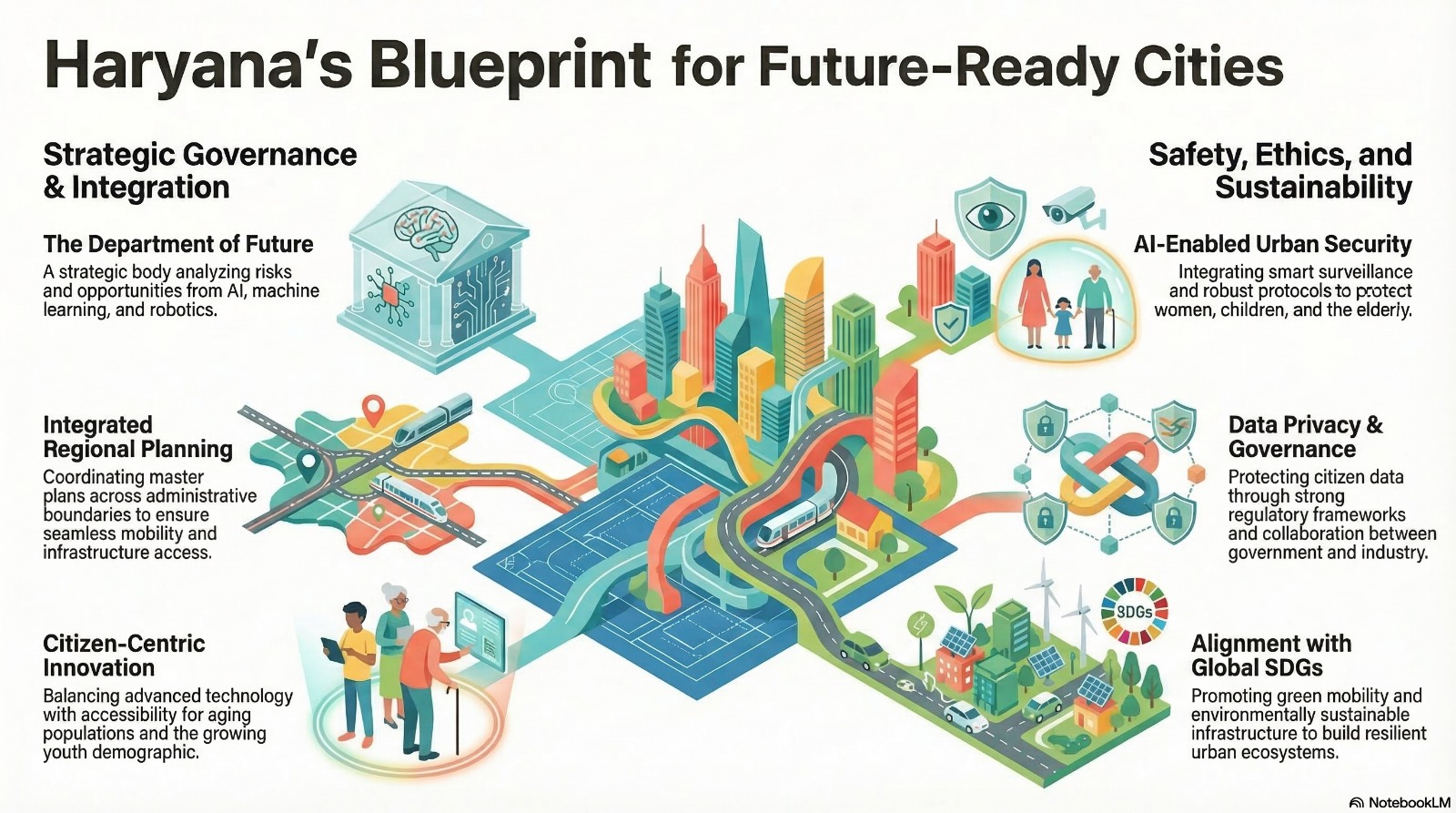
Looking ahead, the focus on sustainability, innovation, and quality of life will define the future of urban development. Aligning policies with Sustainable Development Goals (SDGs), promoting green mobility, and encouraging environmentally sustainable infrastructure are key priorities. Integrating these goals into departmental planning and implementation frameworks will support the creation of resilient and future-ready urban ecosystems.
The overall approach reflects a clear transition towards forward-looking governance, where long-term vision, technological adaptation, and citizen-centric planning come together to shape the cities of tomorrow.
Insights shared by: Amneet P Kumar, Principal Secretary, Department of Future & Civil Aviation and Foreign Cooperation Department, Government of Haryana, at the 6th Elets Urban Innovation Summit 2026, held on 13th March 2026 at Taj Chandigarh