


A meaningful championing of local identity, while recognising the possible co-habitation of distinctive cultures in one place, should be able to cut across socially and economically divided classes for its true representative and inclusive character to emerge—for the benefit of all and for equitable access to available resources.

Culturally inclusive and resilient urban landscapes, with a diverse population, express and foster creativity and better intra and inter-community bonding, leading not only to a sense of well-being and social stability but tangible economic and other benefits for all. The channelling of culture here is thus done with the best outcome for all, by ensuring that culture and its related activities are not appropriated by a chosen few or acquire a largely highbrow and elitist association.
How does local identity get established? Is it through the core values and belief system that a certain group of people share, the specific knowledge and skills they possess, the way they dress and eat, or the language they use? Is it to do with their traditional occupation that may be intrinsically connected to the place they live in? Would this identity also get shaped by or shape migrant communities, and, as seen in many examples in India, incorporate a varied mix of cultures stemming from diverse communities settled in a particular place?

Overall, urban infrastructure, governance, smart technologies, financial strengthening, and environmental protection are crucial markers for development. However, social infrastructure is equally vital. UNESCO‘s Global Report on Culture for Sustainable Urban Development suggests integrated planning and the “valuing of local cultures and the promotion of cultural expressions, the arts, and heritage” as pillars of sustainable social and economic development. The distinctiveness, and therefore the attraction and draw, of such cities or regions depend on communities that contribute to this distinctiveness. If our planning for this segment does not incorporate the best use of diverse communities’ special skills or potential to contribute, it is in danger of becoming, ironically, divisive rather than uniting.

An appreciation of resident communities’ aspirations, perceptions, and insights, as well as their involvement in planning for the future, can contribute immensely to an understanding of the issues affecting development and the solutions at hand. This requires giving equal representation and voice to all communities, with an awareness of their specific cultural activities and requirements. For instance, it would be problematic to lump the whole of the northeast of India into a broad framework without establishing the several distinctions within it, along with conducting some level of in-depth study of its many cultures to inform the planning process.

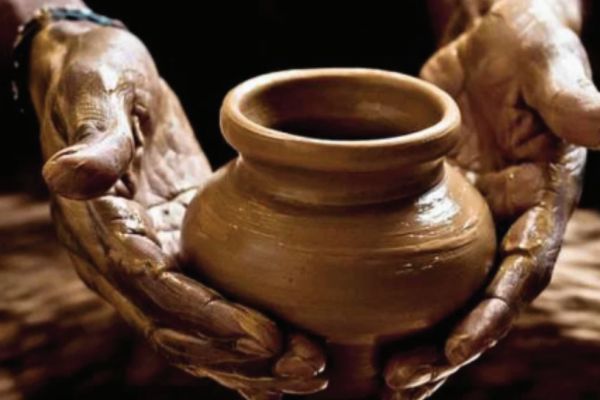
Cultural assets and resources comprise not just institutions built by government or non-government entities—who undoubtedly have their part to play— but are also embodied in local culturally creative communities engaged in traditional occupations, such as artisans, weavers, potters, craftsmen, those contributing to local food traditions, performance artists (both classical and folk), such as singers, musicians, and dancers, as well as other knowledge- holders and practitioners of intangible cultural heritage (ICH). Acknowledging their contribution to the mass pool of creative talent, and to shaping the intrinsic character of a place, is a factor in establishing their rightful place in the urban or rural landscape, leading thereby to a rewarding deployment of their core skills.

In a recent project for the NMCG, INTACH undertook a landmark study of the ICH, as well as the natural and built heritage, along the entire stretch of the river Ganga from Gomukh to Gangasagar. Starting from the small towns abutting the upper Ganga, the documentation also covered towns and cities like Haridwar, Bulandshahr, Meerut, Farrukhabad, Kannauj, Mirzapur, Ballia, Patna, and Munger, among countless others, revealing special identities stemming from the ICH of these places. The project sought to garner a greater understanding of the cultural behaviours of different communities, with their active participation and involvement, within these cities, as well as in the surrounding rural landscapes.
In each of these individual studies, scores of interviews were conducted with a wide selection of residents representing different aspects of cultural skills and knowledge, leading to numerous findings—some new, some part of existing and established research. These findings were a discovery of invaluable cultural traditions embedded in the social fabric of each place, linked to discrete local identities. The enthusiastic retelling of their traditions by the local residents, in the form of narratives, folklore, tales, and ballads, as well as their demonstration with pride of the techniques and skills related to crafts and the arts that are passed on orally, are all hope-inducing testimonies to their continued practice and a validation of the unique appeal of each place. However, this may soon be a thing of the past if local community heritage does not find its place in cultural policy and planning.
INTACH also has an ongoing program of mapping and documenting the distinct identities of numerous communities across the country, as well as historically significant heritage cities like Varanasi, Prayagraj, Gaya, and Lucknow. Some years ago, an initiative of pop-up neighbourhood museums in Delhi by the Centre for Community Knowledge, Ambedkar University, in partnership with INTACH, specifically for Mehrauli, brought out interesting learnings. While on one hand, diverse cultures may coexist in a fascinating spatial setting along the ghats of Varanasi, Delhi, on the other hand, geographically encompasses a patchwork mass of such spaces. The exhibitions created as a result of this particular project were based not just on research but also on shared local narratives, as told by the residents of specific neighbourhoods, incorporating places, history, traditions, memories, and stories crucial in establishing local identities for communities. It was a collection of living and lived heritage of the neighbourhood, with photographic material sourced from research and, in some cases, from the residents themselves.
In the final analysis, an inclusive and participative approach in heritage management would lead to a sense of pride in and ownership of the heritage that surrounds us in so many tangible and intangible forms. This would give an impetus to local voluntary participation in conserving heritage, especially in cases where a monument complex is surrounded by local communities.
Views expressed by – Nirupama Y. Modwel, Principal Director, Intangible Cultural Heritage Division, Indian National Trust for Art and Cultural Heritage (INTACH)