


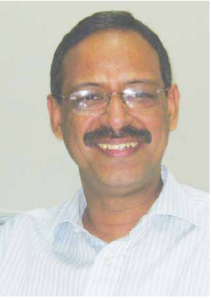
 What was your objective behind implementing IT in the RSBY scheme?

RSBY started its operation on April 1, 2008 and has now been operational for almost three years. While we were conceptualising the scheme, we were cautious of the basic characteristics of the target beneficiaries, which are the below poverty line workers. We were aware that these persons were primarily by definition poor. We wanted a scheme, which is cashless because a poor man cannot raise resources to meet his requirements and claim in the insurance company. Another challenge was that majority of the beneficiary population was illiterate. Therefore, we wanted to evolve a paperless health insurance scheme and that’s where technology became handy to us.
How have biometrics and smart cards helped the scheme?

Since most of the workers migrate from one place to another. It was a challenge for us to enable them avail these facility anywhere in the country and again technology was the answer to this.

I am not very sure ten years ago this could happen; technology was not mature enough to take care of these problems. We are fortunate that use of smart cards became the basis of the scheme. It helps the identification of beneficiaries through biometric system. Large numbers of schemes in India have not been successful as beneficiaries were not clearly identified as there was no foolproof method of identification. Here, biometrics has been immensely beneficial in the identification process.

Do you think that biometric identification is more workable than real time connectivity system?

There has been a debate that whether smart card should actually be used or there should be real time connectivity. Unfortunately, in India all places are not real time connected and it will take some time for the entire country to be real time connected.
In biometric identification, the data is stored on a chip. When the person goes to hospital the data is verified with the data on chip and it enables the offline system. Smart card also helps to ascertain whether there is sufficient amount available in the card.
Almost every state of the country is now offering RSBY scheme to its BPL population. As on date, 23 million smart cards are active in the country and more than 1.5 million people have already availed treatment at various hospitals. The scheme has been chosen by the World Bank as one of the top 18 social security schemes.Countries like Bangladesh and Maldives have also taken the decision to replicate a similar scheme in their countries.
The current union budget proposes to expand the reach of this scheme to include various unorganised sectors. Please throw light on this decision.
Now, the scheme is by and large stabilised. It started with BPL and is now going beyond BPL. It is going to extend to the street vendors. In the current Union Budget Finance Minister has announced the extension to MGNREGA beneficiaries and beedi workers also. Railway Ministry is going to extend this scheme to railway portals and postal departments to extend it to their postmen.
The latest incident of application of this scheme is in the German embassy. They are going to implement RSBY for all their casual workers working for them.
In India corruption and fraud has always been a challenge in the implementation of various government schemes. How have you dealt with such challenges?
Technology plays a very important role in the overall implementation of RSBY. To control fraudulent activities the data generated everyday is analysed. We
“The scheme has a business sense for everyone involved and by this all serving the poor.”
study the trends on daily basis to check what is happening where and in this way we can verify if something goes wrong somewhere. We can access data, analyse data and then take appropriate action.
Do you think RSBY will be able to achieve the goal of inclusive growth in India?
It has achieved the goal of inclusive growth. It is addressing poorest of the poor and the out of pocket expenses of the poor have come down to a large extent. In case of RSBY, every penny is electronically accounted for. Perhaps, this is a first ever business model for a social sector scheme in India. The scheme has a business sense for everyone involved and by doing this business, they are serving the poor. Such business models are very sustainable. It is a very unique model that it is happening in India and I think this is quite a revolution.
Could you please tell us about your technology providers?
We don’t have a single technology provider. There is a security software, which is entirely prepared by the NIC as the security software could not be given to anybody else. Another is data software, which is developed by World
Bank. Then there are a host of process softwares, out of which the enrollment software has been prepared in-house and the other software have been developed by different agencies.
When you initially started the scheme, what was your motive behind using technology in such a huge way?
Everything was not pre-planned. In term of poverty and illiteracy, we learnt that technology was the only solution as we wanted to make the scheme cashless and paperless. We have committed mistakes and corrected ourselves and have evolved after a period of time. It has been quite a journey. We are still evolving on the technology front. We are planning for a national database system called CIES (Comprehensive Information Exchange System). We plan to link all hospitals through the CIES.
What were the challenges in technology implementation in RSBY?
Smart card technology was not stabilised anywhere in country. Secondly, health insurance was itself a challenge because health insurance was collapsing worldwide. I think the biggest challenge was our internal attitudes to believe that it can happen. Fortunately, we have an outstanding team, which is full of energy and is always looking towards solutions.
Also, we have not been able to reach out to the beneficiaries as much as we wanted. We are glad that a lot of agencies like UNDP are helping us. However, a lot of things still need to happen. For instance, we are not so happy with the quality of service. In future, we are going to evolve a methodology to prevent collusive frauds and misuse of cards.