


 N Ravi Shanker
CMD, BBNL (Bharat Broadband Network Limited),
Department of Telecommunications, Ministry of Communications & IT,
Government of India

“The current information available on the Internet is predominantly anglo-centric. We need to create local content for the consumption of local masses,”
The Internet penetration in the country is quite low. While the voice segment has made great progress, the data segment is lagging behind. Why is this so?
The telecom sector comprises of two broad segments-the voice segment and the data segment. The voice segment has seen a revolution in the last decade with the consumer base touching almost 900 million plus now. This is a very positive development. Today a significant portion of citizens have access to mobile phone services. But the mobile revolution really took off when the infrastructure got revamped in all parts of rural India. Ninety percent of the rural areas have telecom towers. The other factors that enabled the telecom revolution are competitive tariffs and the affordability of devices. When you look at the data sector, which is either the Internet or the broadband, as it is broadly understood, the penetration is very low. Hardly 14 million broadband connections are there, but at the same time if we look at the model of Internet usage, we find that there are approximately 100 million users in the country. So right now we are having a system where Internet is predominantly being used as a shared infrastructure, with many using the same connection. Common Service Centres (CSCs) have provided a new impetus to Internet usage in rural India. The role that the cyber cafes played in the urban areas during the early years of the Internet, the CSC are now playing in the rural areas.

What is the mandate of BBNL?
The data sector needs stimulus like the one that has been seen in the voice sector. The government has entered into a dialogue with the telecom industry; it has been found that if they went about their business as usual, the penetration of telecom would take several years to complete. The single inhibiting factor is the cost of laying optical fibre. The cost is difficult to recover as there is not enough demand in the rural areas. So the govern- ment was pushed into thinking that it was a better idea to create a sophisticated infrastructure that could lead to better broadband penetration in rural areas. Once the recommendations of the tariff regulator arrived, the Government of India embarked upon setting up the National Optical Fibre Network (NOFN) that would bring connectivity to all 2,50,000 panchayats throughout the country. The underlying objective is to ensure that e-learn- ing, telemedicine, e-Governance and e-commerce are made available to all the rural citizens. BBNL is a Special Purpose Vehicle, set up by the Govern- ment of India for the establishment, management and operation of NOFN.

Much of the telecom network of the recent years has been created by the private players. So why did the government decide for upfront investment in NOFN rather than providing incentives to private sectors for the work?
This model has emerged out of lengthy discus- sions with the private sector. The government has been deeply engaged in a dialogue with the entire telecom industry to ascertain the best model to go ahead with the implementation of National Optical Fibre Network. Non-discrim- inatory access to the NOFN will be provided to all the service providers. The Telecom Service Providers (TSPs), ISPs, cable TV operators and content providers can launch various services in rural areas. Various categories of applications like e-health, e-education and e-Governance etc. can be provided by these operators. The NOFN project is estimated to cost about `20,000 crore. It is proposed to be completed in two years time. The project will be funded by the Universal Service Obligation Fund (USOF).

Penetration of broadband in rural areas in the country is very low. It is also true that Internet is not exactly on the priority list of our rural 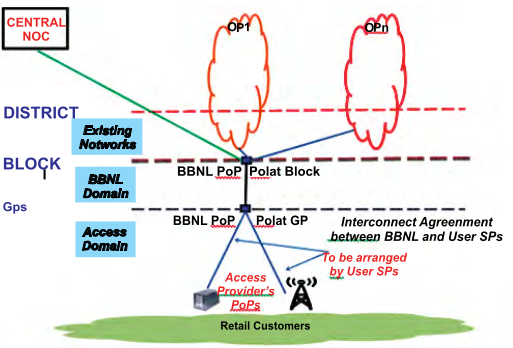 population. Do you think that there will be any issue regarding the shortage of demand of this massive infrastructure?
I would like to take the question into two parts. Firstly there are targets which our government would like to achieve. As per the Telecom Policy announced this year, our target is to achieve 175 million broadband users by 2017, and take this to 600 million by 2020. Now we have to see as to what is needed to bring about improvements in the levels of broadband in rural areas. In the voice sector, it was the need to communicate that acted as a trigger, while in the data sector it is the relevance and benefit that Internet usage shall bring to the rural masses that can act as trigger. I think herein lies the key answer to the growth of broadband. Basically what we need is the content that is relevant and valued by the rural population; this shall form the cornerstone of development. The current information available on the Internet is predominantly anglo-centric and is not much targeted to the local masses. We need to move out of this and create local content for the consumption of local masses. In the project rural population will be the main focus.

What about the cost of devices? India is a cost-sensitive nation, especially in the rural areas.
Of course, the cost of devices is an issue. At this point of time, the rural population mainly makes use of shared infrastructure of the Common Services Network, to access the Internet. This is mainly because laptops, desk- tops, notebooks, net books, or any other tablets or Internet devices are quite highly priced. In order to have higher penetration of broadband and Internet in rural areas, it is necessary that we have an `5,000 tablet with all available features of a high-end tablet. Another factor that would drive the usage is the tariff. The 2G or voice sector has the most competitive tariff. A change needs to come in the data sector. The prices have to come down. And we also need to develop a fundamental ecosystem in which there is union of data and voice.
Digital literacy could also be a factor behind the lack of popularity of data services in rural areas. What can we do about it?
Now that you mention it, I was about to come to the issue of ITC literacy. The ITC literacy needs to be curbed in order to create a rise in demand in our rural areas. This is challenge that lies before several educational and IT companies. We have ITC literacy programmes in English, but there is a need to develop content in various Indian languages also. We also need to move out from text-based learning format to voice-based learning, audio-visual, animation type of learning that has a better potential for engaging people from rural India. And I think an ecosystem has to be developed in order to make the broadband revolution a reality. There is no denying the fact that data is more complex than the voice sector, but with the right strategies we can make data usage popular. The National Optical Fibre Network infrastructure is the first of its kind. It will trigger the broad- band revolution in rural areas, but we need to have the right ecosystem in place.
What kind of opportunity do you see in the NOFN project for the private sector?
Let me put it this way that NOFN project is a telecom infrastructure project. The three CPSUs will be adopting the most transparent tender mechanisms. The Department of Telecom has already issued the guidelines on the preferential market access to ensure that the NOFN network is built on the strength of goods and equipments manufactured within the country. So the in-country manufacturers of both the national optical fibre and electronic equipments will benefit from the project. The National Optical Fibre Network project was approved in October 2011. The Government of India envisages that the project will be completed in two years, so by 2013, we will be at the completion state. BBNL will be laying the incremental cable from wherever it exists today, (usually at the block level), to the gram panchayat level. This will involve laying about five lakh kilometres of optical fibre. BBNL is working at full speed to lay the network.