
Chandigarh is steadily advancing towards a future-ready urban model by integrating innovation, technology, and sustainability into its development framework. As cities across India face the pressures of rapid urbanisation, rising infrastructure demands, and environmental concerns, the need to build smarter, greener, and more inclusive urban ecosystems has become increasingly urgent. Chandigarh, known for its planned development and high quality of life, is now focusing on strengthening its governance systems and infrastructure to meet these evolving challenges while maintaining a balance between growth and sustainability.

At present, the city is working to align its development priorities with the broader vision of Viksit Bharat @2047, ensuring long-term, structured, and inclusive growth. As urban demands continue to rise, the focus is on adopting forward-looking strategies that integrate planning, policy, and innovation. This approach reflects a commitment to not only preserving Chandigarh’s legacy as a model city but also preparing it for the complexities of future urban expansion.
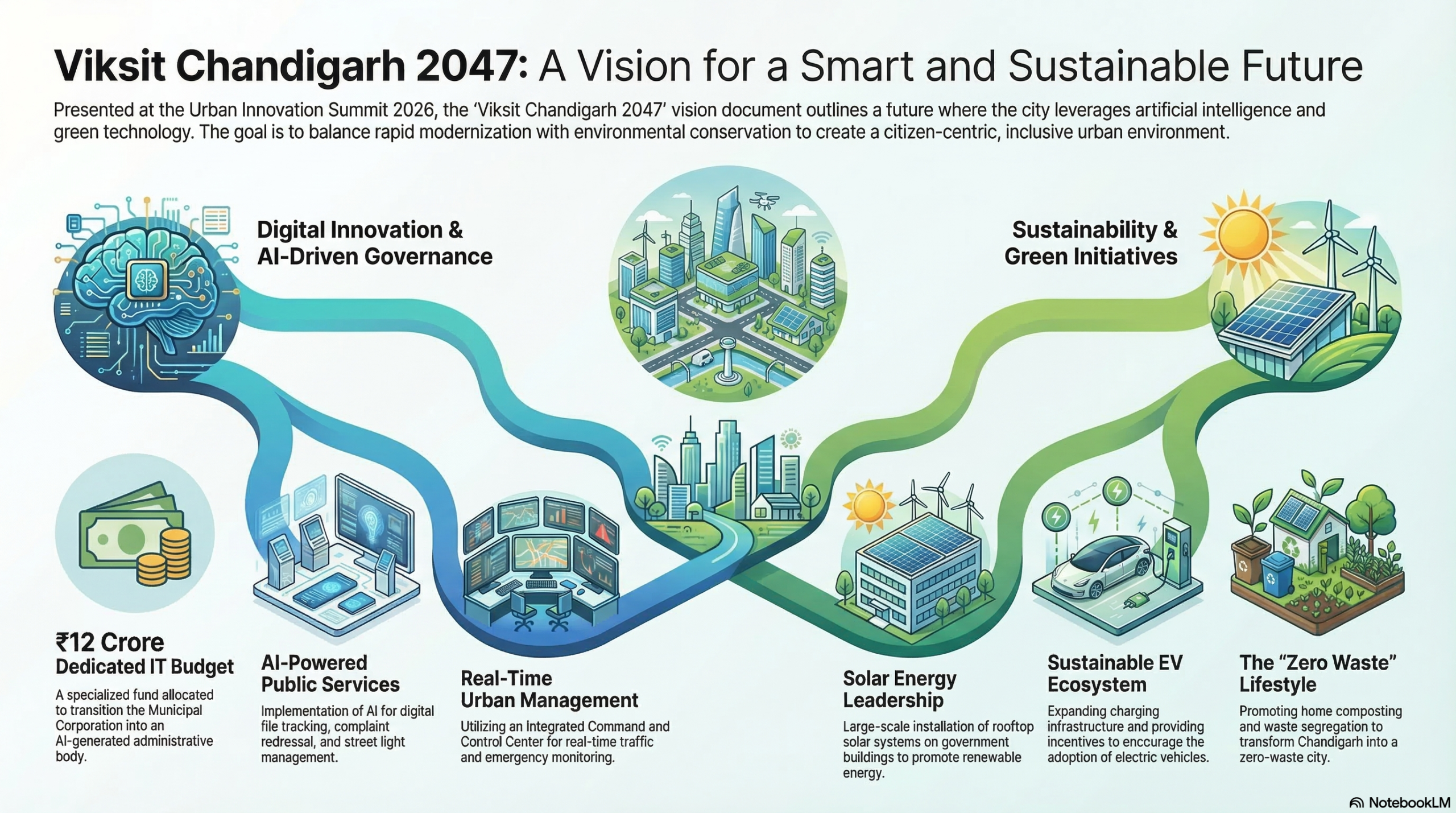
To support this transition, Chandigarh is placing strong emphasis on leveraging technology to modernise governance and improve service delivery. The Municipal Corporation has taken significant steps to digitise administrative processes and enhance efficiency through technology-driven solutions. Increasingly, the integration of advanced systems, including artificial intelligence, is being explored to create a more transparent and responsive governance framework.
Key areas of focus include digital file tracking, technology-enabled grievance redressal, real-time monitoring of waste collection, and smart street-light management. These initiatives are aimed at improving operational efficiency while ensuring that citizens receive faster and more reliable services. At the same time, the city is moving towards a long-term vision of becoming a digitally empowered urban centre under the “Viksit Chandigarh 2047” framework, with dedicated investments being made in IT infrastructure to enable data-driven governance.
Sustainability remains a central pillar of Chandigarh’s urban strategy. The city has made notable progress in promoting renewable energy, particularly through the installation of rooftop solar systems on government buildings. These efforts are helping reduce dependence on conventional energy sources while contributing to environmental conservation. At the same time, there is a continued push to expand the adoption of clean energy solutions across sectors.

In addition to energy, sustainable mobility is emerging as a key priority. Through its Electric Vehicle (EV) policy, Chandigarh is encouraging the adoption of cleaner transportation alternatives. The expansion of EV charging infrastructure and supportive policy measures is helping create an enabling ecosystem for electric mobility, which is expected to play a crucial role in reducing urban pollution and improving air quality.
Waste management and cleanliness are also receiving focused attention. Several awareness initiatives have been launched to encourage citizens to adopt responsible waste practices, including segregation at source, home composting, and a shift towards a zero-waste lifestyle. These efforts highlight the importance of public participation in building a clean and sustainable city, recognising that long-term environmental goals can only be achieved through collective action.
Also Read: Advancing Urban Transformation with Technology and Citizen-Centric Governance
Chandigarh is also transitioning towards a data-driven model of urban governance. Through the Integrated Command and Control Centre (ICCC), real-time monitoring of traffic, civic services, and emergency systems is being carried out. This integrated approach enhances coordination among departments and enables faster, more informed decision-making, improving overall urban management.
At the same time, it is recognised that technology alone cannot drive urban transformation. A collaborative approach involving government institutions, industry, academia, and citizens is essential for achieving sustainable and inclusive development.
Through these coordinated efforts, Chandigarh is strengthening its journey towards becoming a resilient, inclusive, and future-ready city. The approach reflects a balanced strategy that combines technological innovation, sustainable practices, citizen participation, and long-term planning to build an urban ecosystem capable of meeting future challenges while ensuring a high quality of life for its residents.
Insights shared by: Saurabh Joshi, Mayor, Municipal Corporation Chandigarh, at the 6th Urban Innovation Summit 2026, held on 13th March 2026, in Taj Hotel, Chandigarh